Epithalon in Retinal Aging Research: Eye Health and Photoreceptor Studies
Overview of Epithalon research in ocular aging models — photoreceptor preservation, retinal pigment epithelium protection, and the pineal-retinal connection in age-related vision decline research.
The Retinal Aging Problem
The retina is among the highest-metabolic-rate tissues in the body and is particularly vulnerable to age-related decline. Key changes in aging retinas include:
- Loss of rod photoreceptors (15-20% reduction by age 70 in human studies)
- Retinal pigment epithelium (RPE) dysfunction — accumulation of lipofuscin, A2E
- Reduced retinal blood flow and angiogenic decline
- Decreased melatonin production by photoreceptors (retina is a secondary melatonin production site)
- Drusen formation and complement dysregulation (age-related macular degeneration pathway)
The Pineal-Retinal Connection
Epithalon's origin — the pineal gland — is biologically connected to retinal function in several ways:
- Circadian entrainment: The pineal-retinal axis is the master circadian regulator. Light signals from retinal ganglion cells reach the suprachiasmatic nucleus and then regulate pineal melatonin. Pineal dysfunction (age-related or otherwise) disrupts retinal rhythms.
- Melatonin in the retina: Melatonin is produced locally in photoreceptors (not just the pineal gland) and acts as a potent antioxidant in the highly ROS-exposed retinal environment. Declining melatonin correlates with oxidative retinal damage.
- Shared regulatory peptides: Epithalamin (Epithalon's parent polypeptide) affects both the pineal gland and retinal function — suggesting the pineal bioregulator system extends to photoreceptor biology.
Khavinson's Retinal Research
Khavinson's group conducted several studies specifically investigating Epithalon's effects on retinal aging:
Key Findings
Photoreceptor density preservation: In aged rodent models, Epithalon treatment was associated with preserved rod and cone photoreceptor density compared to untreated controls. The effect was most pronounced for rod photoreceptors, which are more vulnerable to age-related loss.
Retinal function maintenance: Electroretinogram (ERG) recordings showed preserved a-wave and b-wave amplitudes in Epithalon-treated aging animals — indicating functional photoreceptor and bipolar cell preservation, not just structural.
RPE protection: Retinal pigment epithelium cell counts and morphology were better preserved in treated animals. RPE health is critical for photoreceptor survival (RPE provides metabolic support to overlying photoreceptors).
Oxidative stress reduction: Lipid peroxidation markers in retinal tissue were reduced following Epithalon administration — consistent with the antioxidant effects observed in other tissues.
Shop Clavicular's Protocol
Research-grade Retatrutide and BPC-157 from our trusted research supplier — the exact peptides behind the most viral looksmaxxing transformation.
Mechanism: How Epithalon May Protect Retinal Tissue
1. Melatonin Restoration
Epithalon's documented effect on pineal AANAT (rate-limiting melatonin enzyme) restores nighttime melatonin production. Melatonin:- Scavenges hydroxyl radicals and peroxynitrite in photoreceptors
- Upregulates antioxidant enzymes (SOD, GPx) in RPE cells
- Regulates photoreceptor shedding rhythm (critical for outer segment renewal)
2. Circadian Normalization
Retinal functions are tightly circadian-regulated:- Phagocytosis of shed photoreceptor outer segments by RPE occurs at dawn (circadian peak)
- Disc shedding rate is governed by circadian clock genes
- Disrupted circadian rhythm (common in aging) impairs this renewal cycle
3. Anti-Inflammatory Effects
Retinal aging involves low-grade neuroinflammation — microglial activation, complement deposition, and cytokine accumulation. Epithalon's documented anti-inflammatory properties (reduced IL-6, TNF-alpha) may limit this process.4. Telomerase in the RPE
RPE cells are post-mitotic in the adult retina. While telomere erosion is less relevant for non-dividing cells, Epithalon's broader anti-aging transcriptional effects (DNA methylation changes, epigenetic restoration) may still apply to RPE gene expression.Research Models for Epithalon Retinal Studies
In Vitro
- Human ARPE-19 cells (RPE cell line): measure oxidative stress response, melatonin production, cytokine secretion
- Mouse 661W cells (photoreceptor cell line): oxidative challenge survival assays
In Vivo
- Light-damage retinal degeneration model (albino rodent)
- Rd10 mouse (progressive rod-cone dystrophy)
- Naturally aging C57BL/6 mouse (age-related retinal changes)
- ERG recording for functional assessment
- Immunohistochemistry: rhodopsin (rod marker), S-opsin (S-cone), RPE65 (RPE marker)
Practical Research Notes
For retinal research specifically, Epithalon's reconstitution and storage are standard (see the Epithalon Research Protocols guide). The primary consideration is:
- Systemic vs. local delivery: Published retinal studies used systemic (SC/IP) administration; topical ocular delivery has not been studied and would require custom formulation work given the blood-retinal barrier
- Study duration: Retinal morphology changes require longer study periods (4-12 weeks in rodent models)
- Controls: Age-matched untreated controls are essential; young adult controls for context
Build Clavicular's Stack
Research-grade Retatrutide + BPC-157 from our trusted research supplier. The exact protocol behind Clavicular's viral looksmaxxing transformation.
Featured Products
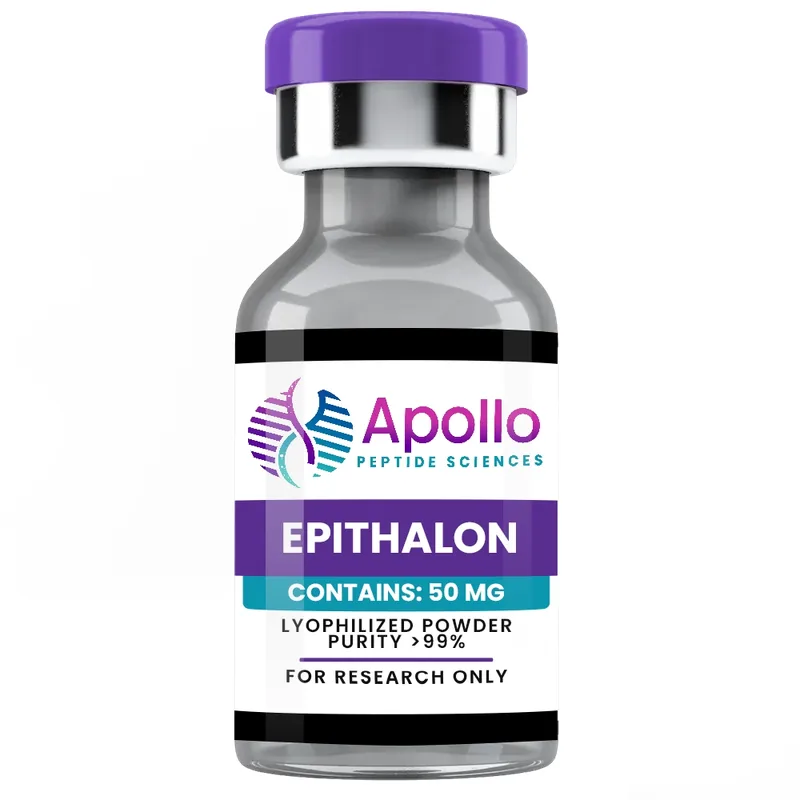
Epithalon 50mg
A synthetic tetrapeptide (Ala-Glu-Asp-Gly) derived from the natural pineal peptide epithalamin. The most studied peptide bioregulator — 40+ years of research covering telomerase activation, telomere elongation, anti-aging, melatonin regulation, and lifespan extension in rodent models. Supplied as lyophilized powder for laboratory research.
CAS: 307297-39-8