Epithalon vs. Thymalin: Comparative Peptide Bioregulator Research
A head-to-head comparison of the two most studied Khavinson peptide bioregulators — Epithalon (pineal) and Thymalin (thymus) — covering their mechanisms, research overlap, and combined-protocol rationale.
Background: Khavinson's Bioregulator System
Vladimir Khavinson's group at the Saint Petersburg Institute of Bioregulation and Gerontology developed a complete system of tissue-specific peptide bioregulators over four decades. Each peptide is derived from a specific organ and is proposed to restore gene expression in that corresponding tissue as levels decline with age.
Of the 20+ bioregulators studied, Epithalon (pineal-derived) and Thymalin (thymus-derived) are the two with the most extensive published research records — and the two most frequently investigated in combination.
Epithalon (AEDG): Pineal Gland Bioregulator
Source: Derived from epithalamin, a polypeptide extracted from bovine pineal glands Sequence: Ala-Glu-Asp-Gly (4 amino acids) Molecular weight: ~432 Da
Primary Research Targets
- Telomere biology: hTERT upregulation, measurable telomere elongation in somatic cells
- Melatonin restoration: AANAT upregulation, restored nocturnal melatonin peaks in aging rodents
- Longevity: 8-13% mean lifespan extension in rodent studies
- Tumor suppression: Reduced spontaneous tumor incidence in aging models
- Circadian regulation: Normalized locomotor rhythms in aged animals
Mechanistic Specificity
Epithalon acts primarily through transcriptional regulation — specifically hTERT promoter activity and DNA methylation changes. Its effects are upstream and genomic, making it a foundational longevity research tool.Thymalin: Thymus Bioregulator
Source: Derived from thymalin extract from bovine thymus gland Type: Polypeptide mixture (not a defined single sequence like Epithalon) Key active fractions: Various di-peptides and tri-peptides
Primary Research Targets
- Thymic involution reversal: Preserved thymic architecture in aging rodents
- T-cell output: Maintained naive T-cell production from thymus
- NK cell function: Enhanced natural killer cell cytotoxicity in aging models
- Immune response: Restored delayed-type hypersensitivity responses
- Longevity: Combined with Epithalon in studies showing additive lifespan benefit
Mechanistic Specificity
Thymalin works primarily at the immune level — its target organ is the thymus, and its downstream effects cascade through T-cell maturation, NK activation, and cytokine balance normalization.Shop Clavicular's Protocol
Research-grade Retatrutide and BPC-157 from our trusted research supplier — the exact peptides behind the most viral looksmaxxing transformation.
Head-to-Head Comparison
| Parameter | Epithalon | Thymalin |
| Source tissue | Pineal gland | Thymus |
| Structure | Defined tetrapeptide (AEDG) | Polypeptide mixture |
| MW | ~432 Da | Variable |
| Telomere research | Primary target | Not documented |
| Melatonin | Restores nocturnal peaks | Indirect (via immune) |
| T-cell function | Indirect restoration | Primary target |
| NK cell activity | Documented | Primary target |
| Tumor suppression | Strong evidence | Strong evidence |
| Lifespan extension | 8-13% (rodent) | Additive with Epithalon |
| Clinical data | Khavinson cohorts | Khavinson cohorts |
Combined Protocol Research
Khavinson's group published several studies using Epithalon and Thymalin in combination. The rationale:
- Complementary targets: Epithalon addresses genomic/telomere aging; Thymalin addresses immune aging
- Both decline together: Pineal and thymic involution parallel each other with age
- Additive lifespan effect: Rodent data suggests greater lifespan benefit with combination vs. either agent alone
- Immune-longevity link: Immunosenescence (Thymalin's target) accelerates cancer and infection mortality; Epithalon's tumor suppression and Thymalin's immune enhancement are mechanistically complementary
Summary
For researchers studying multi-pathway longevity approaches, Epithalon and Thymalin represent the two most validated Khavinson bioregulators with distinct, complementary mechanisms. Epithalon is the better-characterized individual agent with a defined sequence and published telomere data; Thymalin provides the immune axis that Epithalon does not address directly.
Epithalon 50mg from Apollo Peptide Sciences — for laboratory research only.
Build Clavicular's Stack
Research-grade Retatrutide + BPC-157 from our trusted research supplier. The exact protocol behind Clavicular's viral looksmaxxing transformation.
Featured Products
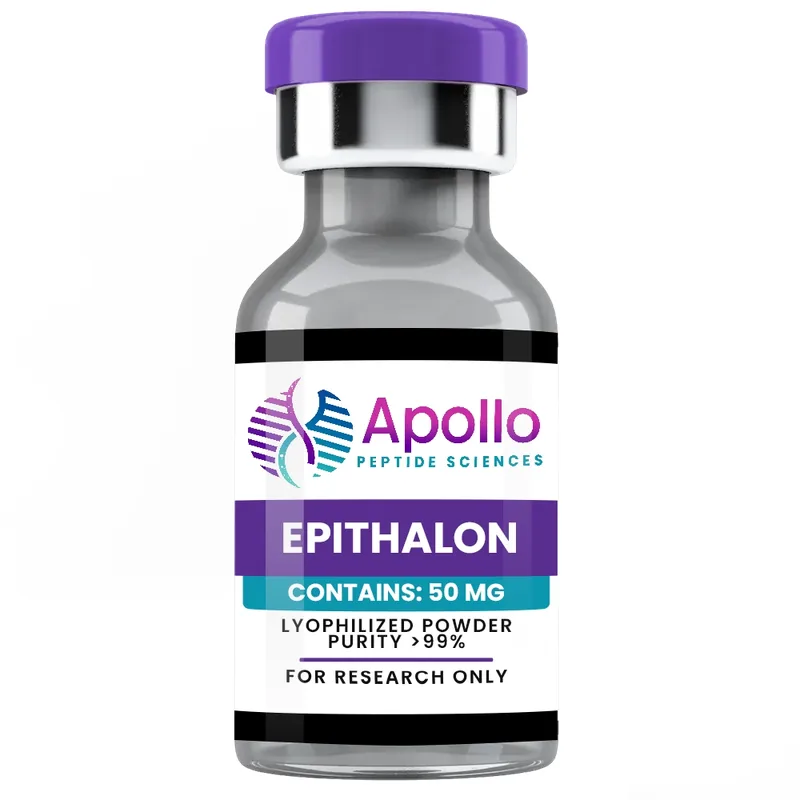
Epithalon 50mg
A synthetic tetrapeptide (Ala-Glu-Asp-Gly) derived from the natural pineal peptide epithalamin. The most studied peptide bioregulator — 40+ years of research covering telomerase activation, telomere elongation, anti-aging, melatonin regulation, and lifespan extension in rodent models. Supplied as lyophilized powder for laboratory research.
CAS: 307297-39-8