Part of Clavicular's Looksmaxxing Stack
TB-500 complements BPC-157 in the looksmaxxing recovery stack. Often recommended alongside Clavicular's core protocol for enhanced healing.
Research Specifications
- Active Sequence:
- Ac-LKKTETQ (core actin-binding motif)
- Full Name:
- Thymosin Beta-4 fragment (synthetic analogue)
- Molecular Weight:
- 2174.5 Da
- Form:
- Lyophilized powder
- Purity:
- ≥98% (HPLC verified)
- Storage:
- −20°C long-term / 4°C up to 4 weeks reconstituted
- Reconstitution:
- Bacteriostatic water
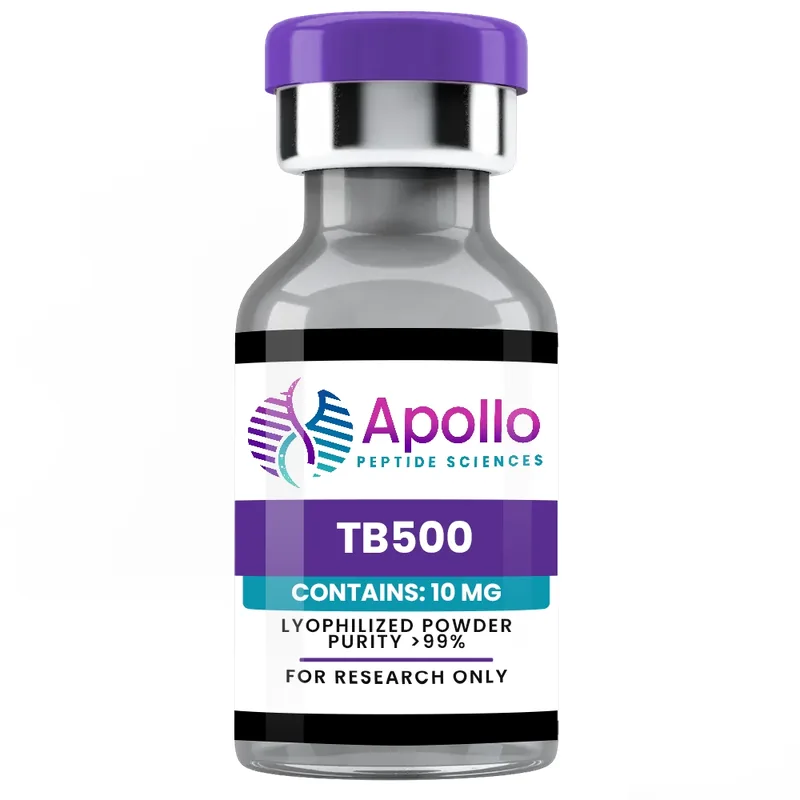
TB-500 10mg
Featured in Clavicular's looksmaxxing protocol
Synthetic Thymosin Beta-4 fragment — researched for actin regulation, satellite cell activation, and systemic tissue repair across muscle, tendon, and cardiac models.
Why Clavicular Uses This Peptide
TB-500 complements BPC-157 in the looksmaxxing recovery stack. Often recommended alongside Clavicular's core protocol for enhanced healing.
See Clavicular's complete looksmaxxing stack →Actin Sequestration & Satellite Cell Activation
TB-500 is a synthetic analogue of the active Ac-LKKTETQ region of Thymosin Beta-4 (Tβ4), a 43-amino-acid peptide present in virtually all nucleated cells. Its primary mechanism is G-actin sequestration via the Ac-LKKTETQ motif — this promotes cell migration, angiogenesis, and tissue repair by controlling actin polymerization dynamics. TB-500 activates satellite cells (muscle stem cells), upregulates metalloproteinases for ECM remodeling, and reduces pro-inflammatory cytokines including TNF-α and IL-1β. Its systemic cell migration properties make it complementary to BPC-157's local angiogenic mechanism — the two are the most studied peptide repair combination in published literature. Molecular weight: 2174.5 Da.
Research Highlights
Satellite Cell Activation
TB-500 promotes satellite cell (muscle stem cell) entry into the cell cycle and differentiation into myoblasts. In vitro and animal models demonstrate increased satellite cell proliferation at injury sites, driving muscle regeneration after damage. This makes TB-500 particularly relevant to skeletal muscle repair and atrophy recovery research.
Cardiac & Vascular Research
Multiple studies have examined Thymosin Beta-4 in cardiac repair post-infarction. Animal models demonstrate reduced cardiomyocyte apoptosis, improved neovascularization, and enhanced functional recovery after ischemic injury. TB-500's VEGF upregulation and endothelial cell migration promotion are the primary vascular mechanisms.
Synergy with BPC-157
TB-500 and BPC-157 are the most studied peptide combination in healing research. BPC-157 drives local angiogenesis and growth factor upregulation at injury sites; TB-500 drives systemic cell migration and actin regulation. The two work on complementary pathways — TB-500 mobilizes repair cells while BPC-157 provides vascular infrastructure.
Research FAQ
What is the difference between TB-500 and BPC-157?
How does TB-500 differ from native Thymosin Beta-4?
How should TB-500 be reconstituted?
Research Use Only. This product is intended for in-vitro laboratory research only. Not for human consumption, injection, or therapeutic use. Not medical advice. Always consult applicable regulations in your jurisdiction.
More from Clav's Stack
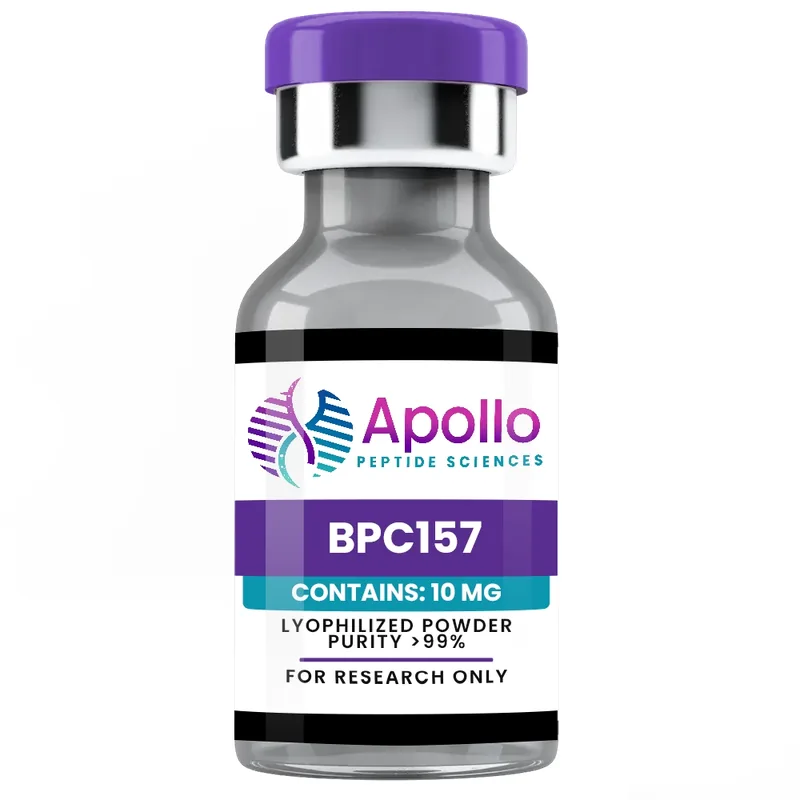
BPC-157 10mg
BPC-157 is a 15-amino acid synthetic peptide derived from a protective gastric protein. One of the most researched tissue-repair peptides — studies document accelerated tendon, ligament, and muscle healing; gut lining restoration; and systemic anti-inflammatory effects via NO-system modulation. Frequently researched alongside longevity peptides for its cytoprotective and tissue homeostasis properties.
CAS: 137525-51-0
TB-500 10mg
$59.99