GHK-Cu Gene Expression Mechanism: How Copper Peptide Reverses Aging Transcriptome
Deep dive into the molecular mechanism of GHK-Cu — how the copper peptide modulates 300+ gene expression changes associated with aging and disease, and why this makes it unique among anti-aging research compounds.
The Scale of GHK-Cu's Gene Regulation
Most peptides studied for anti-aging work through a single defined pathway — a receptor agonist, an enzyme substrate, a signaling cascade. GHK-Cu is categorically different. Bioinformatics analysis by Pickart and Margolina (2018) identified GHK-Cu as modulating the expression of over 4,000 human genes — upregulating approximately 2,084 and downregulating approximately 2,340.
Of these, the most biologically significant finding: GHK-Cu broadly reverses the gene expression patterns associated with aging, cancer progression, and neurodegeneration — three conditions with heavily overlapping transcriptional signatures.
What Happens to Gene Expression During Aging
The aging transcriptome is characterized by:
Upregulated in aging (problematic):
- Inflammatory cytokines: IL-6, IL-8, IL-1beta, TNF-alpha, MCP-1
- Matrix metalloproteinases: MMP-1, MMP-2, MMP-9 (ECM degradation)
- Pro-apoptotic signals: BAX/BCL-2 ratio shifts
- Oxidative stress markers: NOX2, NOX4 (NADPH oxidases)
- Senescence-associated secretory phenotype (SASP) components
- Collagen I, Collagen III, Elastin (structural ECM proteins)
- TIMP-1, TIMP-2 (MMP inhibitors)
- Antioxidant enzymes: SOD1, SOD2, GPx, Catalase
- Neurotrophins: BDNF, NGF
- DNA repair genes: BRCA1, PARP1 efficiency
- Mitochondrial biogenesis: PGC-1alpha, TFAM
Shop Clavicular's Protocol
Research-grade Retatrutide and BPC-157 from our trusted research supplier — the exact peptides behind the most viral looksmaxxing transformation.
How GHK-Cu Reverses This Pattern
Copper as the Active Core
The copper(II) ion is not incidental to GHK-Cu's activity — it is mechanistically central. Copper:
- Is a cofactor for lysyl oxidase (LOX): cross-links collagen and elastin for structural integrity
- Is a cofactor for Cu/Zn-SOD (SOD1): the primary cytoplasmic antioxidant enzyme
- Is a cofactor for cytochrome c oxidase: Complex IV of the mitochondrial electron transport chain
- Participates in tyrosinase-mediated melanin synthesis
Transcription Factor Modulation
GHK-Cu has been shown to modulate several master transcription factors:
SP1 (Specificity Protein 1):
- GHK-Cu increases SP1 DNA binding
- SP1 drives transcription of collagen I, collagen III, and fibronectin promoters
- This explains GHK-Cu's well-documented collagen synthesis promotion
- GHK-Cu reduces NF-kB activity (directly and via Cu/Zn-SOD upregulation reducing ROS-driven NF-kB activation)
- NF-kB is the master inflammatory transcription factor; its inhibition reduces IL-6, IL-8, and MMP expression
- GHK-Cu normalizes p53 activity — reducing pathological p53 activation in senescent cells without eliminating p53 tumor suppressor function
- This dual effect (reducing SASP while preserving tumor suppression) is mechanistically unusual
The Three Core Gene Networks GHK-Cu Targets
Network 1: ECM Homeostasis
- Upregulates: COL1A1, COL1A2, COL3A1 (collagen I and III alpha chains), ELN (elastin), FN1 (fibronectin), DCN (decorin)
- Downregulates: MMP-1, MMP-3, MMP-9
- Net effect: Shifts ECM balance from degradation to synthesis — reversing the aged ECM phenotype
- Upregulates: SOD1, SOD2, GPX1, CAT, PRDX1-5, HMOX1 (heme oxygenase-1)
- Downregulates: NOX2, NOX4 (ROS-producing enzymes)
- Net effect: Comprehensive shift toward antioxidant capacity — particularly relevant for aged cells with elevated baseline oxidative stress
- Upregulates: BDNF, NGF, VEGF, CNTF, GDNF
- Downregulates: Amyloid precursor protein processing enzymes (ADAM10 modulation)
- Net effect: Neuroprotective transcriptional profile — explaining GHK-Cu's emerging role in neurodegeneration research
Aging Transcriptome Reversal: The Key Data
Pickart's bioinformatics analysis (2018) specifically compared:
- Gene expression changes in aging human tissue databases
- Gene expression changes following GHK-Cu treatment in cell culture
This "reversal" is not arbitrary — GHK-Cu specifically upregulates what aging downregulates and downregulates what aging upregulates, at a scale that no other single peptide compound has demonstrated.
Research Implications
For Cell Culture Research
GHK-Cu is one of the few anti-aging research compounds where in vitro results strongly predict in vivo effects. The transcriptional changes are so broad and well-characterized that:- Gene expression profiling (RNA-seq or microarray) is the gold-standard readout
- Multiple passage aging experiments show measurable changes
- Concentration-response is well-characterized: peak effects at 1-10 ng/mL in most fibroblast studies
Synergy with Epithalon
Both GHK-Cu and Epithalon operate via transcriptional mechanisms but at different genomic targets:- Epithalon: hTERT promoter, methylation at aging-related CpG sites
- GHK-Cu: SP1 sites, NF-kB elements, p53 response elements across thousands of genes
GHK-Cu 50mg and Epithalon 50mg from Apollo Peptide Sciences — for laboratory research only.
Build Clavicular's Stack
Research-grade Retatrutide + BPC-157 from our trusted research supplier. The exact protocol behind Clavicular's viral looksmaxxing transformation.
Featured Products
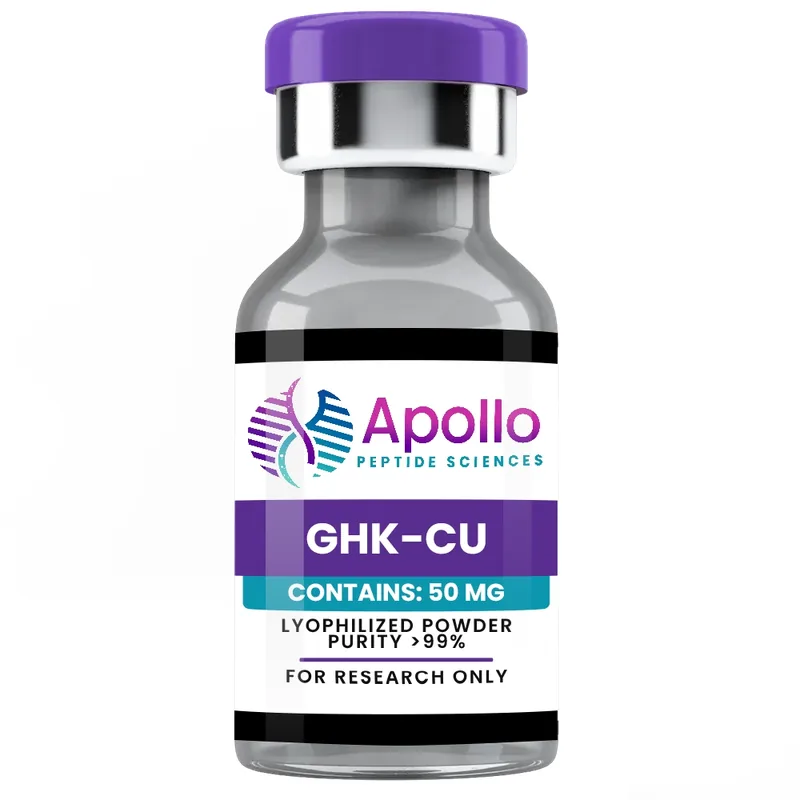
GHK-Cu 50mg
GHK-Cu (glycyl-L-histidyl-L-lysine copper complex) is a naturally occurring copper peptide present in human plasma, saliva, and urine that declines significantly with age. Extensively studied for wound healing, collagen synthesis, anti-inflammatory signaling, and skin remodeling. Research has documented upregulation of over 300 genes and downregulation of 190+ genes implicated in aging. Often researched alongside Epithalon in longevity stacks.
CAS: 49557-75-7
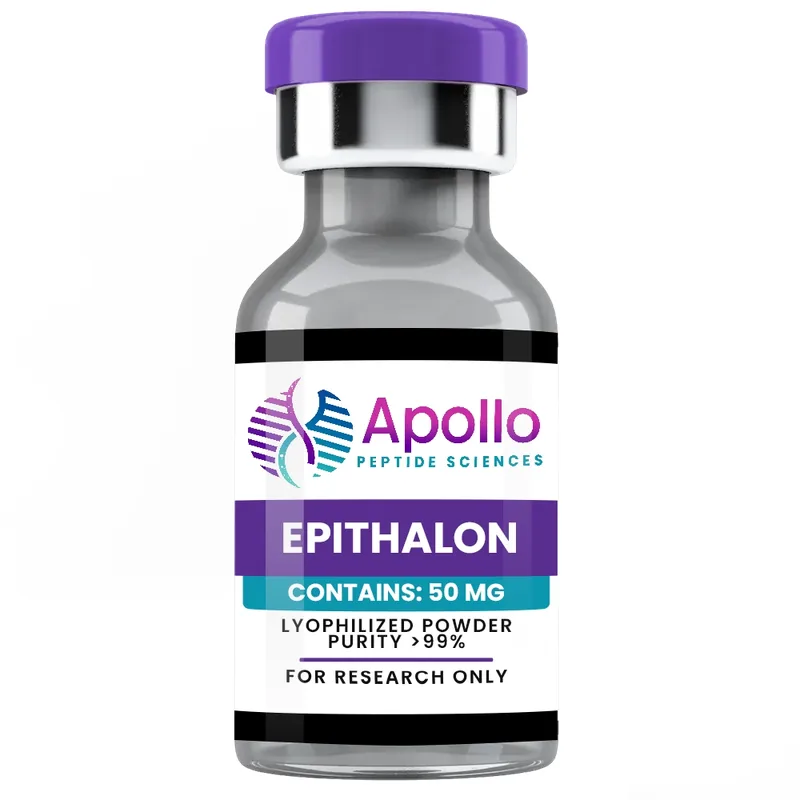
Epithalon 50mg
A synthetic tetrapeptide (Ala-Glu-Asp-Gly) derived from the natural pineal peptide epithalamin. The most studied peptide bioregulator — 40+ years of research covering telomerase activation, telomere elongation, anti-aging, melatonin regulation, and lifespan extension in rodent models. Supplied as lyophilized powder for laboratory research.
CAS: 307297-39-8