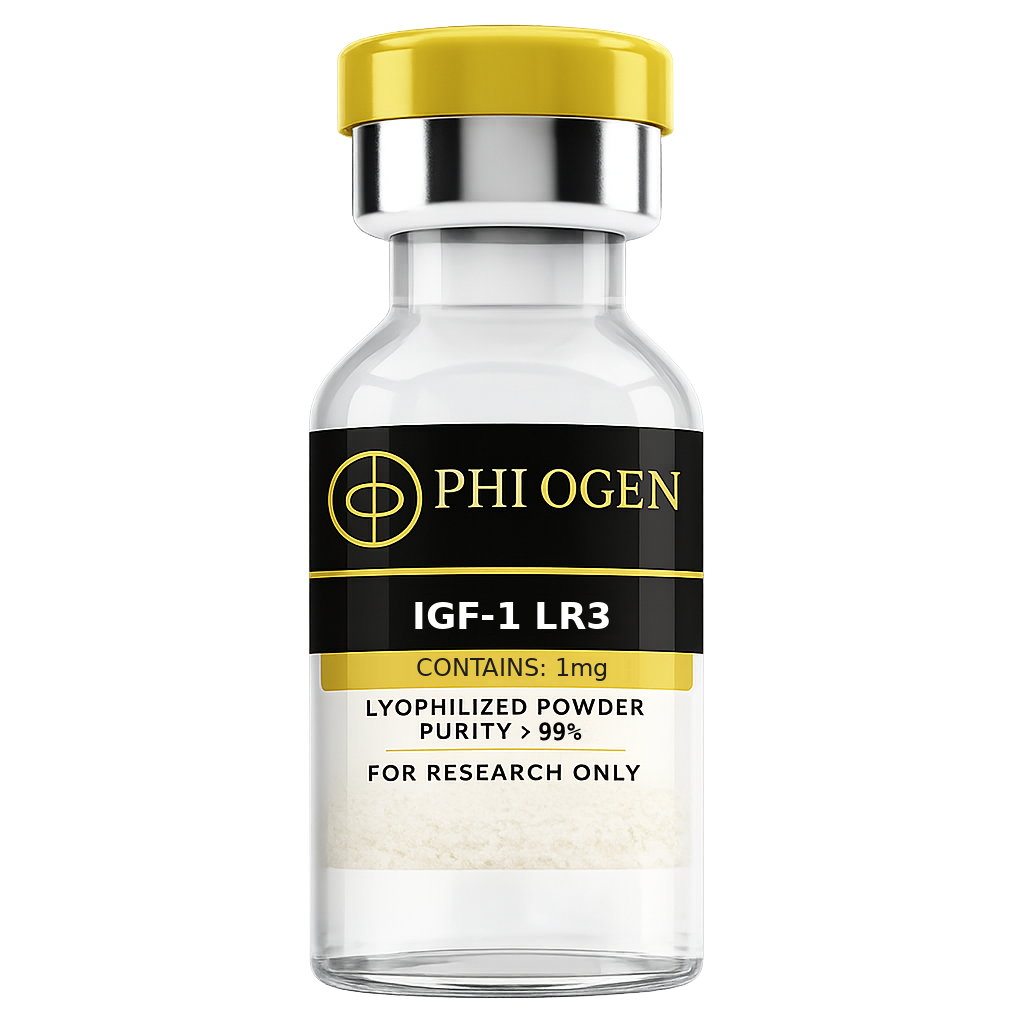
Research Specifications
- Full Name:
- Long R3 Insulin-like Growth Factor-1
- Modification:
- 13 aa N-terminal extension + Arg3→Glu3 substitution
- Molecular Weight:
- ~9,117 Da
- Form:
- Lyophilized powder
- Purity:
- ≥98% (SDS-PAGE and HPLC verified)
- Storage:
- −80°C ideal; −20°C acceptable; 4°C up to 7 days reconstituted
- Reconstitution:
- 0.1% acetic acid or bacteriostatic water with 0.1% BSA
Buy IGF-1 LR3 1mg Online
IGF-1 LR3 1mg purchased 3,671 times
IGF-1 Receptor Agonism & IGFBP Independence
IGF-1 LR3 (Long R3 Insulin-like Growth Factor-1, CAS: 946870-92-4) is a recombinant analog of native IGF-1 with two structural modifications: an N-terminal 13-amino acid extension and an Arg substitution at position 3 (replacing glutamic acid). These modifications reduce IGFBP (IGF binding protein) affinity by >1000-fold. Native IGF-1 is >99% bound to IGFBPs in circulation, limiting bioavailability and producing a 12–15 minute half-life. IGF-1 LR3 remains in free, active form with a half-life of approximately 20–30 hours — a 100x increase. It activates the IGF-1 receptor (IGF-1R), a receptor tyrosine kinase, driving the PI3K/Akt/mTOR pathway (protein synthesis, cell growth, survival) and Ras/MAPK pathway (proliferation, differentiation). IGF-1R is expressed on virtually every cell type. Molecular weight: ~9,117 Da.
What ships on this SKU
Lyophilized Long R3 IGF-1 1mg vial. Modification line (13 aa N-terminal extension + Arg3 substitution) and molecular weight ~9,117 Da on the label and lot CoA.
Purity line on the CoA
Listed at ≥98% with SDS-PAGE and HPLC per listing. Lot-matched documentation ships from the supplier on qualifying orders.
Storage printed with the goods
Lyophilized: −80°C ideal, −20°C acceptable. After reconstitution (0.1% acetic acid or bacteriostatic water with 0.1% BSA per your SOP), refrigerate at 4°C and finish within the supplier window (commonly within one week).
IGF-1 LR3 1mg Shipping & Delivery
US Shipping: 3–5 Business Days
IGF-1 LR3 1mg ships tracked from a US fulfillment center. Free shipping on orders $200+; flat-rate $14.95 under.
Cold-Chain & Packaging
Lyophilized IGF-1 LR3 1mg is heat-stable in transit. Vials ship in rigid cold-pack mailers with lot-matched CoA included.
Storage on Arrival
Refrigerate unopened lyophilized vials at 2–8°C. Reconstitute only when ready to use; refer to the per-compound protocol guide.
Purity Verified on Every Lot
Every IGF-1 LR3 1mg vial ships with a lot-matched Certificate of Analysis confirming ≥98% purity via HPLC. Requests for raw chromatograms accepted post-purchase.
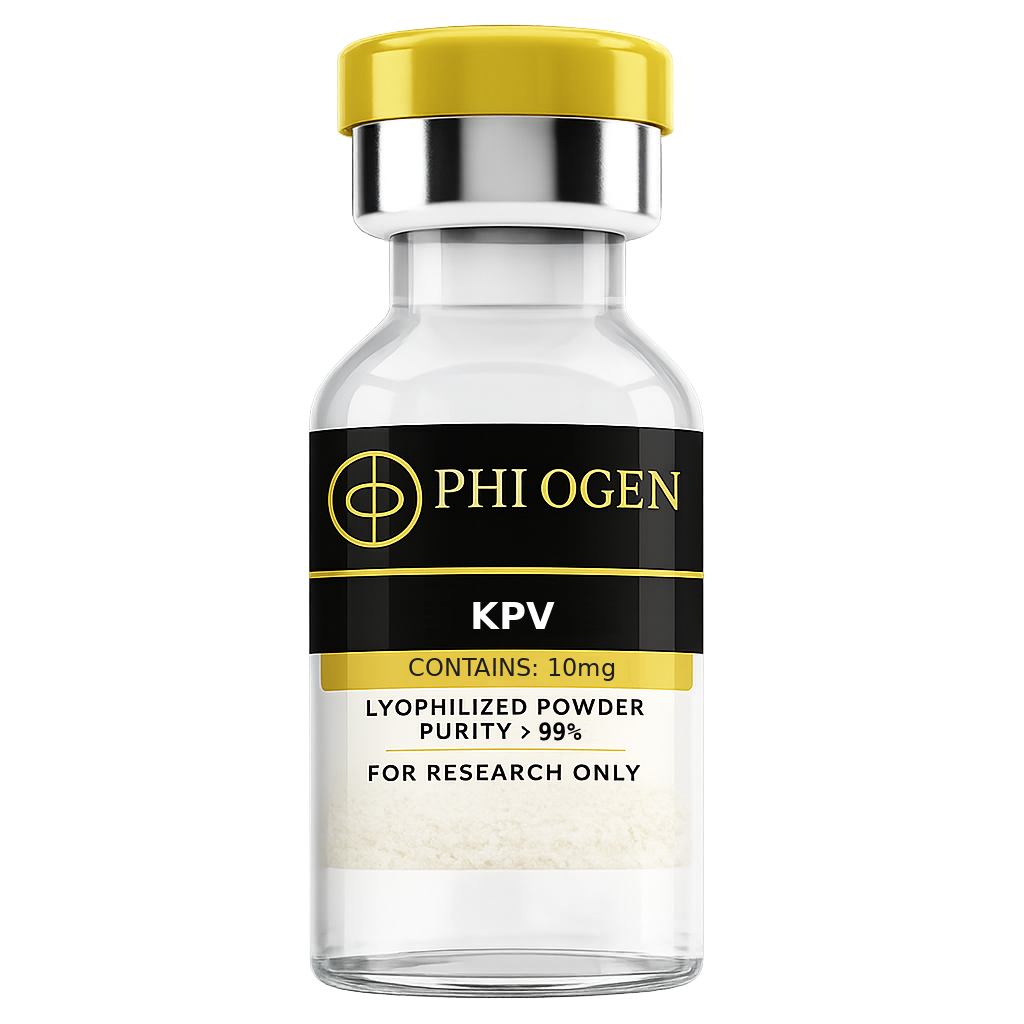
IGF-1 LR3 1mg
$65.00